Blinkit has completely changed how Indians buy groceries and everyday essentials.
Known as India’s last-minute app, Blinkit operates across 200+ cities with 1800+ stores and offers 30,000+ products from top brands. Its 300,000+ delivery partners make sure your order arrives within minutes.
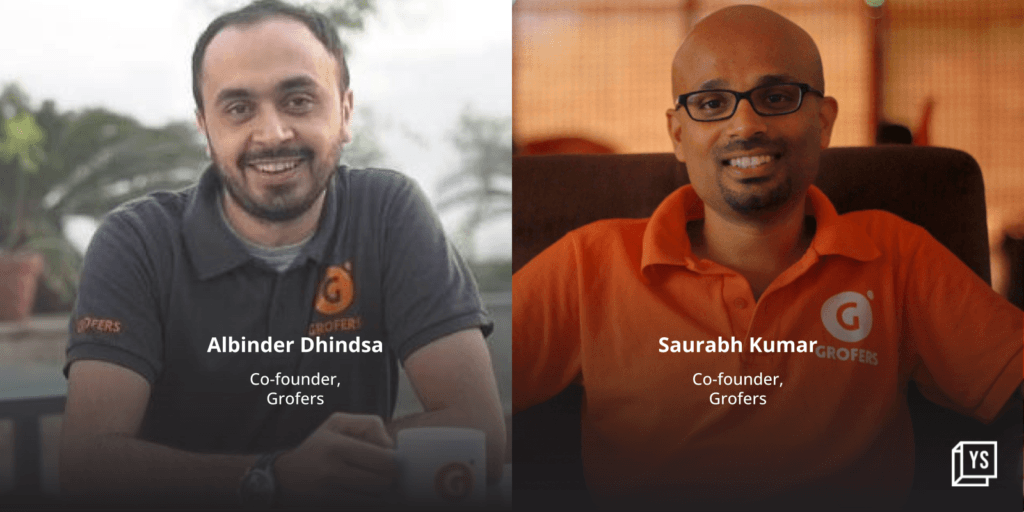
Originally launched as Grofers (an online grocery delivery business), Grofers (now Blinkit) was founded in 2013 by Albinder Dhindsa and Saurabh Kumar in Gurgaon. Over time, it shifted from regular delivery to full quick-commerce, adding everything from fresh produce to snacks and personal care.
Today, Blinkit is one of India’s largest hyper-local eCommerce platforms, competing closely with Zepto, Swiggy Instamart, and BigBasket.
Let’s understand how Blinkit works and how it makes money!
Blinkit Tagline: “Let’s Blink It”
Overview Of the Blinkit Business
| Point | Overview |
| Company Name | Blinkit |
| Tagline | Let’s Blink It |
| Founded | 2013 |
| Founders | Albinder Dhindsa, Saurabh Kumar |
| Headquarters | Gurgaon |
| Parent company | Eternal Ltd. (formerly Zomato), acquired August 2022 |
| Business Type | Quick-Commerce (10-minute delivery) |
| Service Area | 200+ cities in India |
| Dark Stores | 1,816 dark stores (as of Sept 2025) |
| Products Offered | 7,000+ products, 10,000+ daily groceries |
| Delivery Partners | 300,000+ partners |
| Business Model (NEW) | Inventory-led model (Blinkit buys and sells products directly) |
| Latest Funding | ₹600 crore by Eternal (Nov 2025) |
| Total Funding Raised | $757M over 15 rounds |
| Market Share | 50% in quick-commerce (2024–2025) |
| Acquisition by Zomato | $568M all-stock deal |
| Competitors | Zepto, Swiggy Instamart, BigBasket, Dunzo |
Blinkit’s Success Story: How Blinkit Started
In December 2013, Albinder Dhindsa and Saurabh Kumar left their jobs at Zomato to start Onenumber, an on-demand delivery service.
Their idea was simple: to make local deliveries easy by picking up and dropping items from neighbourhood shops like grocery stores, medical stores, and restaurants straight to customers.
Soon, they rebranded it as Grofers and focused on 90-minute delivery of groceries and essentials. The company grew fast and reached 25+ cities in just two years. And completed more than 30,000 orders.
Grofers initially faced tough competition from BigBasket. BigBasket had better margins, more products, and higher order values than Grofers. Despite this, Grofers kept growing.
During the COVID-19 pandemic, when online grocery shopping became necessary, Grofers noticed a growth in order values. However, things soon changed when Zepto entered the market and launched its 10-minute delivery service.
Albinder realised that their current model was no longer sustainable. The old business model wasn’t working anymore.
So the grofers team decided to shift entirely to the quick-commerce model. They shut down regular deliveries in areas where they couldn’t deliver within 10 minutes.
And in 2021, Grofers rebranded itself as Blinkit, symbolising speed and efficiency.
Fast forward in Q3 FY24, Blinkit delivered around 6,00,000 orders, which is 77% more than the orders they delivered in Q3 FY23.
Today, the Zomato-owned company Blinkit leads the quick-commerce market with a 50% share, ahead of Zepto and Instamart.
When did Zomato acquire Blinkit?
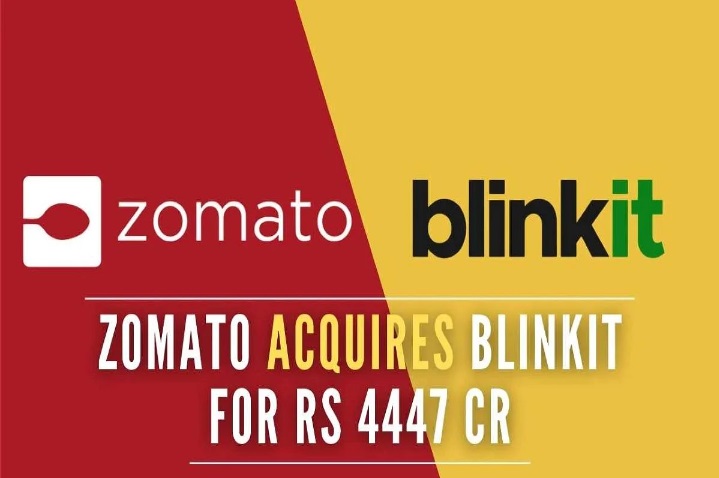
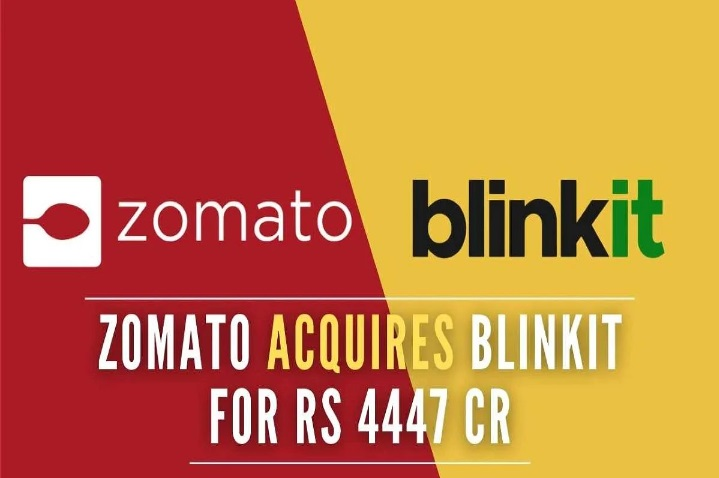
Zomatoofficially acquired Blinkit (earlier Grofers) in August 2022 after months of negotiations. The deal was an all-stock acquisition worth about $568 million (₹4,447 crore).
This wasn’t Zomato’s first involvement with the company. Back in 2021, Zomato had already taken a 9% stake in Grofers.
But by mid-2022, Blinkit was struggling and had even laid off staff, leading Zomato to extend a $150 million loan before finally moving ahead with the full acquisition.
The deal was approved on June 24, 2022, and completed on August 10, 2022. Now, Blinkit is a full Zomato subsidiary.
Also Get To Know More About: How Zomato Started?
Products and Services Offered By Blinkit
Trusted by 20 million+ users every month, Blinkit offers a wide range of 30,000+ products and 10,000+ daily groceries, delivered in minutes.

- Chicken, Meat & Fish
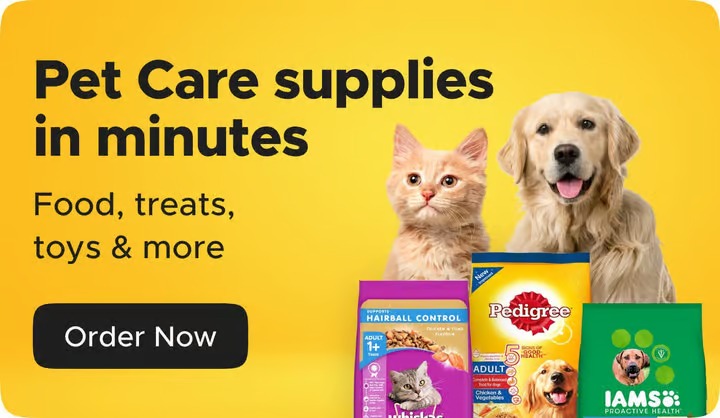
- Pet Care
- Baby Care
- Magazines
- Sweet Tooth
- Tea, Coffee & Health Drinks
- Beauty & Cosmetics
- Dairy, Bread & Eggs
- Breakfast & Instant Food
- Atta, Rice & Dal
- Cleaning Essentials
- Digital Goods
- Personal Care
- Organic & Gourmet
- Paan Corner
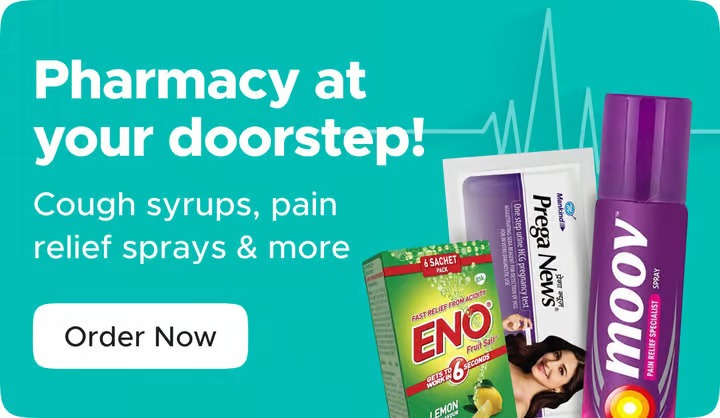
- Pharma & Wellness
- Cold Drinks & Juices
- Print Store
And more.
These products are supported by the core features of Blinkit, such as 10-minute delivery, real-time tracking, and smooth in-app payments.
Blinkit’s Business Model
Blinkit was working on a marketplace business model. Here, local kirana stores and sellers listed their products on the app, owned the stock and set the prices. Blinkit was just supposed to handle the delivery and charge a commission.
All the products were kept in Blinkit’s dark stores for faster services. Since the inventory belonged to the sellers, Blinkit didn’t have complete control over quality, prices, or delivery speed. Plus, the sellers were facing a lot of GST and compliance issues.
Upgraded Business Model Of Blinkit (Fully Inventory-Led Business Model)
From September 1, 2025, Blinkit shifted from a marketplace business model to a fully inventory-based business model.
Through this new Blinkit business model, it will directly purchase goods from brands and sellers. Store them in its own dark stores and warehouses, issue invoices under its own GSTIN, and become the legal seller.
How Does Blinkit Deliver Its Orders In 10 Minutes?
To deliver groceries within 10 minutes, Blinkit uses the concept of the dark store model. These are mini-warehouses, about 3,000 sq. ft. in size, that are packed with daily essentials and only accessible to employees.
Blinkit sets up these dark stores within a 2-4 radius in cities, often in basements or back alleys. This not only saves on rent but also ensures that products are always close to customers.
Did you know: Currently, as of September 2025, Blinkit has 1816 dark store models
How the 10-Minute Delivery Process Works?
Blinkit accepts orders through its app and website.
1. You open the Blinkit app, enter your location, and start browsing. The app shows products available in your nearby dark store.
2. Blinkit automatically connects your order to the nearest dark store with available stock. If something is out of stock, it shows alternatives or checks the next closest store.
3. You add items to the cart, choose a payment option (UPI, card, wallet, or cash), and place the order.
4. The order instantly reaches the assigned dark store. The staff gets a pick list on their device.
5. Store staff quickly pick, scan, and pack the items. This usually takes just 2–3 minutes.
6. The system assigns the nearest delivery partner and picks the fastest route.
7. You can track the order live on the app, and it usually reaches you within 8–12 minutes.
Partner Dark Store Model
Blinkit also uses a partner model to expand these dark stores. It allows entrepreneurs to operate their dark stores while Blinkit manages the inventory and tech. This helps Blinkit scale quickly across cities and maintain fast delivery times.
Blinkit’s Revenue Model: How Does Blinkit Make Money?
Blinkit generates revenue through multiple revenue streams. Let’s have a look at them one by one:
1. Product Margins (Main Source of Revenue)
Most of Blinkit’s revenue comes from the margin it makes on products.
Blinkit buys products from brands at wholesale prices and sells them to customers at retail prices. The difference between the two is its profit margin.
These margins depend on the category. Packaged items like snacks and groceries usually have margins of around 8–15%. But fresh items like fruits, vegetables, and dairy have lower margins because they can spoil quickly.
Blinkit also earns more from its own private-label products, as these typically have higher margins compared to other brands.
2. Delivery Charges:
Blinkit charges a delivery fee per order. Sometimes, they offer discounts or free delivery on products. A part of this delivery fee is also shared with their delivery partners, ensuring they earn for every order delivered.
Note: Small-basket orders (below a minimum order value threshold) attract higher delivery fees to protect unit economics.
3. Commission from wholesalers:
Blinkit collaborates with supermarkets and wholesalers who offer to sell products on this platform. Blinkit charges the commission on the market price.
4. Paid Membership Program
Blinkit offers a subscription for Blinkit Paid Membership (Smart Bachat Club), which provides free delivery for orders over ₹4000. Almost 10% of revenue comes from these subscription plans.
5. Advertisement Promotion:
Blinkit provides an ad platform for companies and collects the commission for advertisements.
Blinkit Funding Rounds
Blinkit has raised a total of $757M over 15 funding rounds.
Here’s the list of all its funding rounds till now:
| Funding Round | Date | Name of Investors | Amount |
| Seeding | October 2014 | Peak XV Partners | $502K |
| Series A | February 2015 | Tiger Global Management, Peak XV Partners | $10M |
| Series B | April 2015 | Tiger Global Management, Peak XV Partners, DST Global | $36.5M |
| Series C | Nov 2015 | SoftBank Group, Tiger Global Management, DST Global, Rahul Ravindra Raj Mehta, Peak XV Partners | $120M |
| Venture Debt | Sep 2017 | Trifecta Capital | $839K |
| Series D | Oct 2017 | Grofers International Pte Ltd | $15M |
| Series E | Mar 2018 | SoftBank Vision Fund, Tiger Global Management, DST Global, Rahul Ravindra Raj Mehta, Peak XV Partners, Yuri Milner | $61.6M |
| Series F | Dec 2018 | SoftBank Vision Fund, KTB Ventures, Capital Investment LLC, Peak XV Partners, Tiger Global Management | $221M |
| Series F | Jul 2019 | Abu Dhabi Capital Group, Tiger Global Management, Peak XV Partners | 10.2M |
| Series F | Aug 2019 | SoftBank Vision Fund | $70M |
| Series F | Oct 2019 | Timesgroup | $20.2M |
| Series F | Jul 2020 | SoftBank Vision Fund, Euler Capital | $7.8M |
| Series G | June 2021 | Zomato | $120M |
| Series G | Sep 2021 | KTB Ventures, SoftBank Vision Fund, Tiger Global Management, KTB Private Equity, KTB Asset Management | $79.3M |
| Conventional Debt | Mar 2022 | Zomato | $150M |
Blinkit Latest Funding Rounds 2026
Eternal, the parent company of Zomato and Blinkit, is still actively investing in its quick commerce business.
In 2026, the company has already made its first move by investing ₹450 crore into Blinkit through a rights issue.
This comes after a big investment push in 2025. Eternal had put in ₹500 crore in January, ₹1,500 crore in February, and ₹600 crore in November. All adding up to ₹2,600 crore in total.
Eternal is doubling down on Blinkit. The money is helping the company grow faster, open more dark stores, and manage its day-to-day costs as it scales.
Blinkit Competitors
The competitors of Blinkit are
- Swiggy Instamart
- Zepto
- Dunzo
- Mapper Merchant
- BigBasket
Interesting Facts About India’s Last Minute App Blinkit
- Blinkit added 272 new dark stores in the second quarter of FY 2025, taking its total count to 1,816 dark stores as of September 30, 2025. The company has big expansion plans and aims to grow this network to around 3,000 dark stores by March 2027.
- Blinkit’s revenue shot up almost 9 times higher in Q2 FY26, reaching ₹9,891 crore, compared to just ₹1,156 crore a year ago. This is because Blinkit has moved from a marketplace model to an inventory-led model.
- Blinkit’s NOV grew 137% year-on-year, showing strong growth compared to last year, but only 27% quarter-on-quarter
- Blinkit won the Best Quick Commerce award for the year 2024.
Frequently Asked Questions
1. What is Blinkit?
Blinkit is a popular quick commerce platform and one of India’s largest on-demand grocery delivery services, founded in 2013. It offers various daily need products like groceries, bakery items, baby care products, and more in just 10 minutes.
2. Is Blinkit owned by Zomato?
Yes, Blinkit was acquired by Zomato in 2022 for $568 million in an all-stock deal.
3. Who is the CEO of Blinkit?
The CEO of Blinkit is Albinder Dhindsa.
4. Is Blinkit bigger than Zomato?
Yes, Blinkit is now bigger than Zomato’s food delivery business. In Q1 FY26, Blinkit made ₹2,400 crore, while Zomato’s food delivery made ₹2,261 crore. So Blinkit earned more and had a higher order value too.
5. Why is Grofers now Blinkit?
Grofers decided to rebrand itself as Blinkit in 2021 after realizing the growing competition in the market. They shifted their business model and entered the quick commerce market. Now, Blinkit focuses on 10-minute delivery to keep up with the fast-paced demands of customers
6. How does Blinkit work?
Blinkit takes your order through its app or website. Picks the items from the nearest dark store, and sends a delivery partner to your location, usually within minutes.
Check Out Our Other Business Models:
1. Swiggy Business Model
2. Freshmenu Business Model